Money
The “one more year” trap
27 June 2026
7 min read
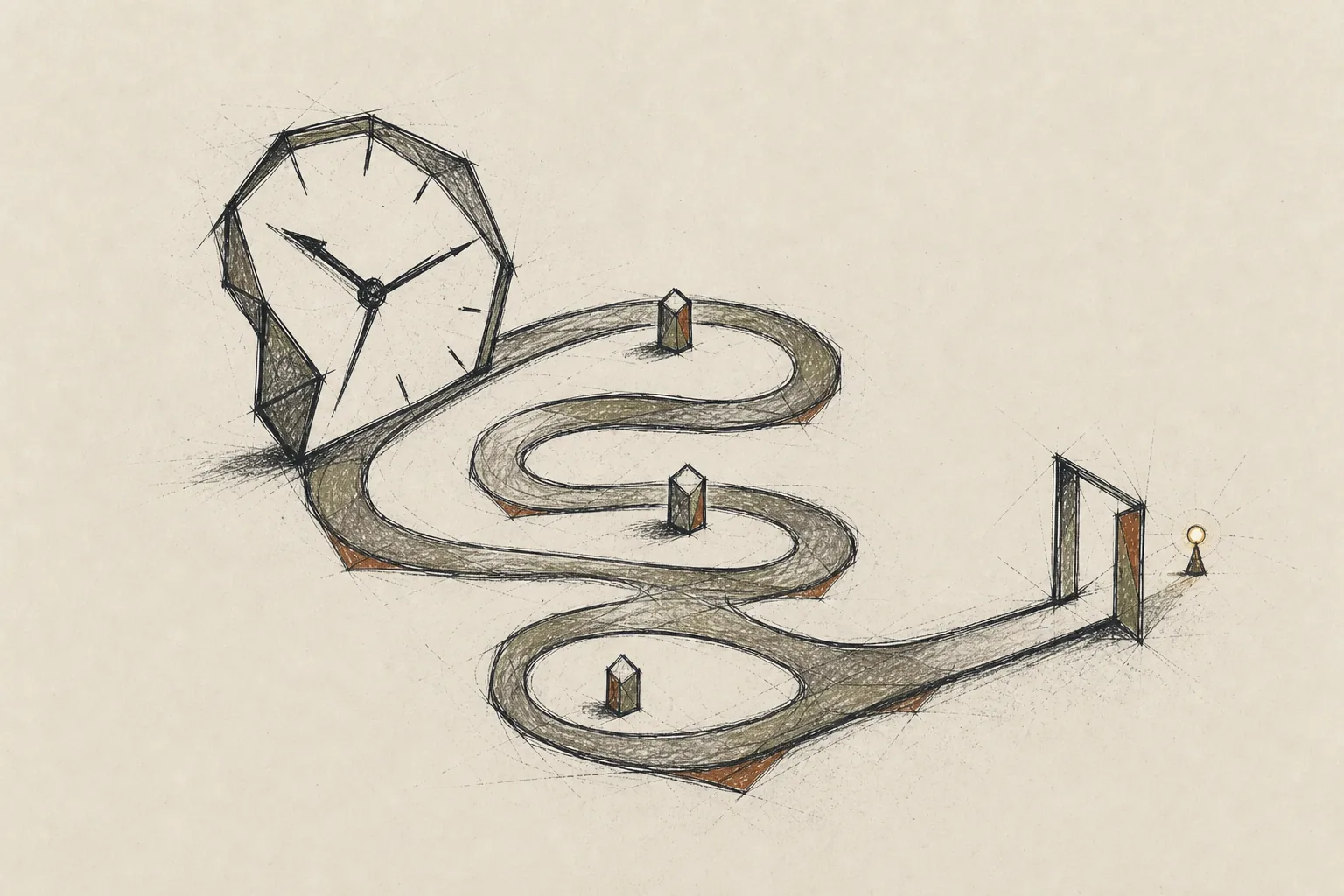
One more year can be excellent risk management. Repeated indefinitely, it becomes a belief system.
The trap works because another year often has a clean financial case: more pension contributions, less withdrawal pressure, another bonus, a smaller mortgage. The cost is harder to display. It is paid in healthy years, deferred experiments and relationships squeezed around work.
Price both sides
Calculate the financial gain from staying, after tax and additional spending. Then write what the year delays. Avoid euphemisms. “A sabbatical” is vague; “three months near my sister while we can both hike” is visible.
For UK pension decisions, check your State Pension forecast and use the free, impartial Pension Wise service if eligible. Pension access, tax and guarantees can be consequential; regulated advice may be appropriate.
Decide with thresholds
Before the next annual review, define what evidence would make you leave, reduce hours or stay. Examples:
- the “good life” budget is funded within a conservative range;
- two years of planned withdrawals sit outside volatile assets;
- a four-day arrangement is accepted or refused;
- the proposed business earns from three real customers.
Without thresholds, caution can manufacture a new reason every year.
Try a reversible version
Negotiate a shorter week, unpaid leave, a contract role or a fixed-term experiment. Build a time portfolio before making a permanent leap. Reversibility is not cowardice; it is a way to buy information.
Remember what cannot compound
Money can compound later. Certain seasons cannot. Parents age. Bodies change. Children leave. Curiosity ignored for long enough becomes harder to hear.
Another year should purchase something you have named. Otherwise it may simply be the most respectable form of postponement.